Featured Posts
Redis, Valkey, or Dragonfly: revisit the choice before you treat them as the same cache
If your service already uses Redis, the name on the port has not changed. The product behind that name has. Treating Redis, Valkey, and Dragonfly as three labels for one cache is the habit worth unlearning.
Read more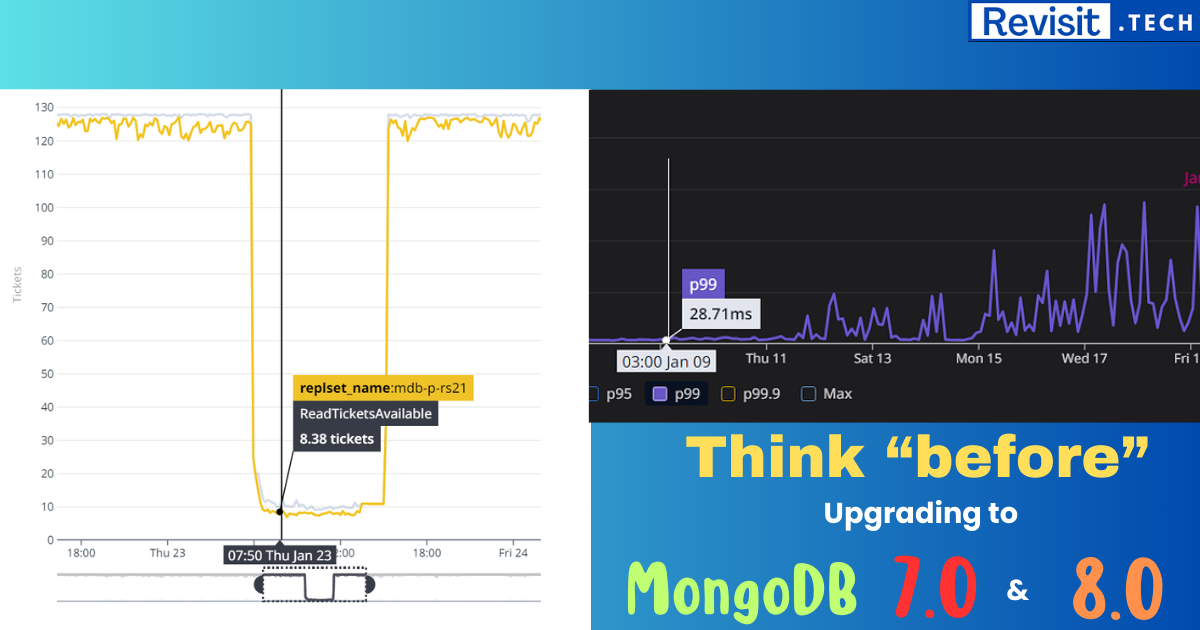
MongoDB 8.0 Performance is 36% higher, but there is a catch…
TLDR: If your app is performance critical, think twice, thrice before upgrading to MongoDB 7.0 and 8.0. Here is why…
Read more
Recent Posts
Self-hosted remote development in 2026: revisit Coder, DevPod and Eclipse Che before you buy another cloud IDE seat
Many teams still treat the laptop as the only place code can live. When that breaks, the next habit is to buy another managed cloud IDE seat, copy the team into a hosted workspace product, and hope the bill and the data residency story stay quiet.
Read moreSelf-hosted PaaS in 2026: revisit Coolify, Dokku and CapRover before you treat another VPS as a home-made Heroku
Many teams still treat a cheap VPS as a home-made Heroku. They SSH in, paste a docker-compose.yml, open ports by hand, renew certificates when something breaks, and promise to “clean this up later”.
Read moreLLM guardrails in 2026: revisit NeMo Guardrails, Guardrails AI and LLM Guard before you ship another chatbot without input checks
An internal chatbot can look ready after a few happy-path demos. Then someone pastes a payroll CSV into the prompt, tries a jailbreak that worked on a public model last month, or asks the bot to call a tool with a destructive argument.
Read moreLLM evaluation in 2026: revisit promptfoo, DeepEval and Ragas before you ship another prompt change on gut feel
A prompt change looks harmless in review. One extra sentence in the system prompt, a new model version, a different chunk size in the retriever.
Read moreDocument parsing for RAG in 2026: revisit Docling, Unstructured and Marker before you feed another PDF to your AI pipeline
Most retrieval-augmented generation (RAG) projects start with a quick demo: load a few PDFs, split the text every 1,000 characters, push the chunks into a vector store and ask questions.
Read moreLLM observability in 2026: revisit Langfuse, Arize Phoenix and OpenLIT before you ship another AI feature without traces
Somewhere in your company today, a team is shipping an AI feature that calls a model, maybe a tool, and returns an answer.
Read more