Showing Post From Performance
Redis, Valkey, and Dragonfly memory and upgrades: revisit before the next spike
A payments team runs its session cache with maxmemory 12gb on a 16 GB node and feels safe. On a festival sale evening a replica reconnects, a reporting job pulls a few huge hashes, and the kernel kills the process while used_memory still shows less than 12 GB.
Read morePostgreSQL asynchronous I/O: revisit your settings before you upgrade
A team upgrades its reporting database from PostgreSQL 16 to 18 over a weekend. On Monday the nightly scans finish a little faster, and nobody knows why, because nobody changed a setting.
Read moreRedis, Valkey, and Dragonfly benchmarks: read the method first
A benchmark number without its method sounds complete, but it does not tell you what happened. The first note in this series, Redis, Valkey, or Dragonfly: revisit the choice before you treat them as the same cache, covered licences, history, data file compatibility, and cluster mode.
Read more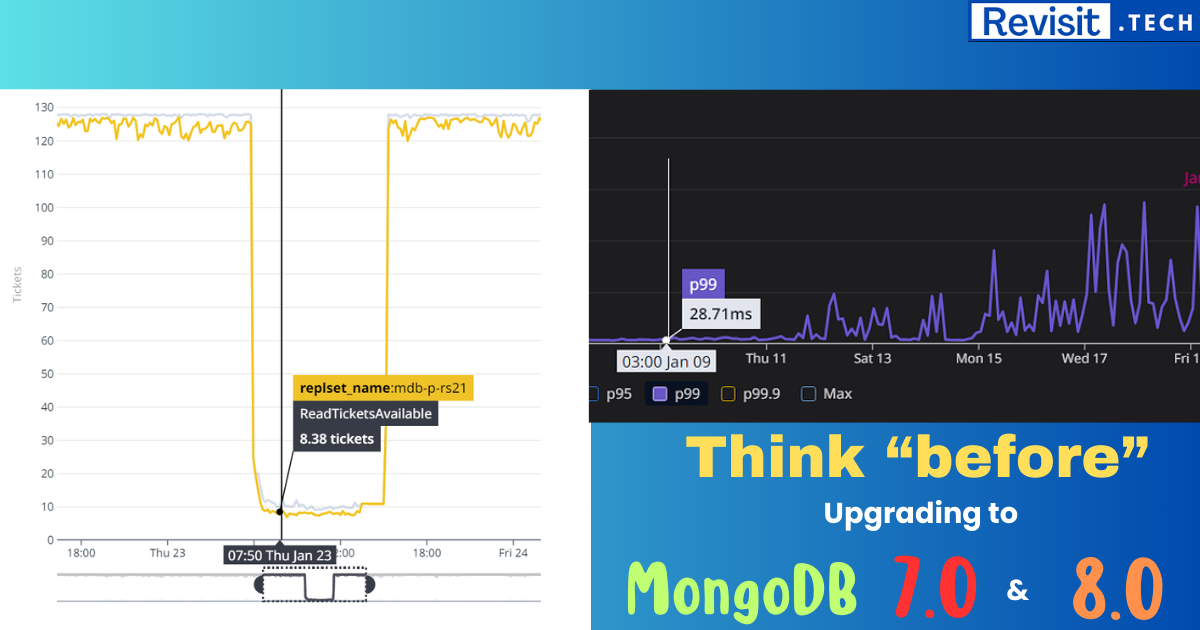
MongoDB 8.0 Performance is 36% higher, but there is a catch…
TLDR: If your app is performance critical, think twice, thrice before upgrading to MongoDB 7.0 and 8.0. Here is why…
Read more
Optimizing MongoDB Performance with Indexing Strategies
MongoDB is a popular NoSQL database that efficiently handles large volumes of unstructured data. However, as datasets grow, query performance can degrade due to increased document scans.
Read more
MongoDB Decay Over Time: How Deletes and Updates Clog Your Database
MongoDB is widely recognized for its flexibility, scalability, and ease of use. However, like many databases, MongoDB’s performance can deteriorate over time, especially in environments with frequent delete and update operations.
Read more